
Table of Contents
- What Makes a Unique Streetwear Apparel Online Shop Worth Buying From
- How to Evaluate Streetwear Quality Before You Buy
- Streetwear Sizing Guide: Getting the Fit Right the First Time
- Streetwear Outfit Ideas for Standout Everyday Looks
- What You're Actually Paying For: Pricing Breakdown
- Shipping, Returns, and Ordering from a Smaller Shop with Confidence
- Conclusion: Choosing a Unique Streetwear Apparel Online Shop That Earns Your Repeat Business
- Frequently Asked Questions
Last Updated: October 14, 2026
What Makes a Unique Streetwear Apparel Online Shop Worth Buying From
Most shoppers learn the difference the hard way: thin fabric, a print that cracks after a few washes, a return window that closed before the package arrived.
Unique streetwear is apparel produced in small runs with original designs, sold directly by the label or a curated retailer rather than through mass-market distribution.
Independent Labels vs. Mass-Market Drops
Independent labels design their own graphics and choose their own blanks. Mass-market drops license a trend, print it on the cheapest garment that quarter, and restock in volume.
That difference shows up in three places:
- Run size. Small labels produce limited quantities, so a design does not appear on every second person downtown.
- Blank selection. Independents pick a specific fabric weight and stick with it across a collection.
- Accountability. When a small shop prints its own work, a complaint about a cracked print reaches the person who chose the ink.
What Hand-Designed Actually Means for Your Wardrobe
Hand-designed means the artwork and construction were developed by the label rather than pulled from a stock catalog.
A hand-designed piece usually carries a collection name and a story behind the graphic. The New York vs Everyone Collection at NYC Authentic's is a good example: heavyweight tees built around a single theme, with design work done in-house rather than licensed, fewer pieces that look like everyone else's.

How to Evaluate Streetwear Quality Before You Buy
Quality in streetwear comes down to three measurable things: fabric weight, stitch density, and seam finishing. None require the garment in hand, and a shop that publishes those details knows what it made.
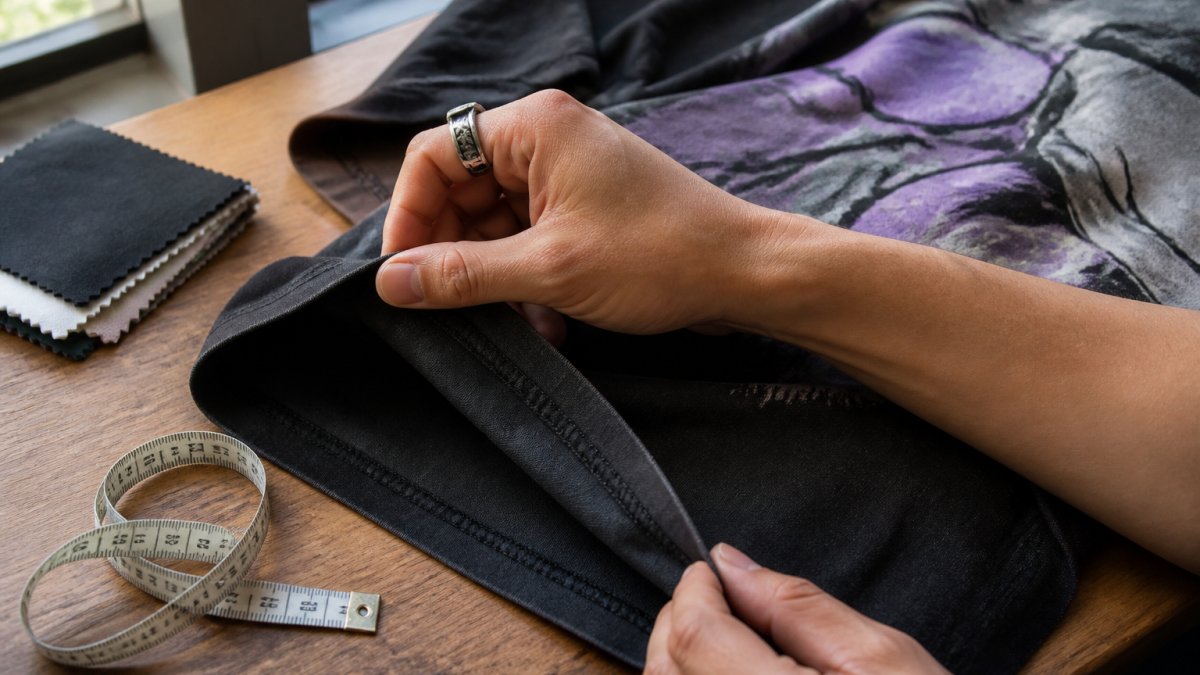
Start with the product page. If it lists fabric weight in ounces per square yard, seam type, and care instructions, that shop has handled its own product.
Stitching, Seams, and What to Inspect
Stitching is the first thing to fail on a cheap garment. Look for:
- Double-needle hems on sleeves and bottom openings, which resist stretching out of shape.
- Reinforced shoulder seams or taped necklines, which stop the collar from rippling after a few washes.
- Even stitch length across a print border, a sign the garment was not rushed through a line.
A common mistake is judging a tee by how soft it looks in a photo. Softness says nothing about whether the collar survives ten washes.
Materials and Construction That Hold Up
Heavyweight cotton holds a print better and drapes with more structure than thin jersey. Thermal layering, used in heavier hoodies, adds warmth without bulk.
The construction detail that matters most is how the print is applied. When a listing specifies heavy weight and thermal layering, as The Final Foundation hoodie does, that is a garment built for repeated wear.

Streetwear Sizing Guide: Getting the Fit Right the First Time
The fastest way to get sizing right is to ignore the tag letter and compare the shop's flat measurements against a garment you already own and like.
Measure a tee or hoodie that fits well: chest across the front, body length from the high point of the shoulder, and sleeve length from the shoulder seam.
Reading Measurements Instead of Trusting the Tag
Flat measurements are taken with the garment lying still, not stretched and not on a body.
A chest measurement of 22 inches across the front on a size large describes the garment itself. Your body chest is smaller, the difference is the ease that lets the fabric drape. Shoppers who compare body measurements directly to flat garment measurements almost always order a size too small.
Streetwear Outfit Ideas for Standout Everyday Looks
The strongest streetwear outfits are built around one statement piece, with everything else kept plain. One graphic tee or heavy hoodie carries the look; the rest supports it.
Three combinations that work reliably, with the reasoning behind each:
- Graphic tee plus straight-leg trousers plus a plain overshirt. The tee does the talking. Keep the overshirt unbuttoned so the graphic stays visible and the silhouette stays vertical.
- Heavy hoodie plus tapered joggers plus a cap. Keep the hoodie the only loud element. Tapered bottoms balance the volume on top so the outfit does not read as shapeless.
- Plain crewneck plus statement bottoms. Reverse the formula when the pants are the focal point. A solid top in a mid-tone keeps the eye on the cut below.
Building Around One Statement Piece
Pick the piece first, then build outward. If the graphic is busy, keep other garments solid and neutral.
A practical test before you commit: lay every piece flat on a bed in the order you would wear it. If two items compete for attention, two graphics, or a graphic plus a patterned bottom, remove one.
Proportion, Layering, and Fit as the Real Differentiator
What separates a distinctive outfit from a generic one is rarely the graphic, it is proportion. A heavyweight tee drapes with more structure than thin jersey, holding a boxier line. A thermal-layered hoodie adds warmth without bulk, so you can layer it under an overshirt without the shoulders bunching.
Three fit rules that hold across most builds:
- Shoulder seam placement. On a relaxed tee, the shoulder seam should sit at or just past the natural shoulder. If it drops well down the arm, the garment is oversized by design, not by accident, check the flat shoulder measurement before assuming a size up will look the same.
- Hem length. A tee that ends at mid-fly keeps the leg line long. A tee that ends below the hip shortens the leg and works better with a longer outer layer.
- Sleeve break. A sleeve that ends mid-bicep reads as a deliberate crop; one that ends at the elbow reads as a size too large.
One Piece, Three Outfits
A single statement garment should earn its place by working more than one way. Take a heavyweight graphic tee:
- Daytime, low-key. Tee tucked loosely into straight-leg trousers, plain overshirt open, minimal accessories.
- Evening, layered. Tee under a heavier hoodie or jacket with only the graphic's top edge showing, so the color story carries rather than the full print.
- Weekend, relaxed. Tee worn loose over tapered joggers, cap as the only accessory, no second graphic.
Why This Matters for a Unique Shop
A shop that sells hand-designed graphics is selling a point of view, not a uniform. The outfits above work because the garment does the work, original artwork on a specific blank, produced in a small run.
What You're Actually Paying For: Pricing Breakdown
A higher price on a small-label garment usually funds heavier fabric, smaller runs, and original design work. The question is whether those costs show up in the garment.
Here is how the components typically break down:
| Cost Component | What It Covers | Why It Raises Price |
|---|---|---|
| Fabric weight | Heavier cotton per garment | More raw material per unit |
| Print method | Screen printing setup | Setup cost spread over a small run |
| Design work | Original artwork and collection development | Paid once, recovered across fewer units |
| Run size | Limited quantity per design | No volume discount on materials |
| Fulfillment | Picking, packing, shipping | Fixed cost per order regardless of size |
Heavyweight Tees and Hoodies: Price vs. Longevity
A heavyweight tee at $50 and a lightweight tee at half that price are not the same purchase. The heavy one survives more washes, holds its shape, and keeps the print intact longer, lowering the effective cost per wear.
NYC Authentic's prices its heavyweight tees from the New York vs Everyone Collection at $50, including Paint The Town, We Can't Be Stopped, and NY So Fly.
Shipping, Returns, and Ordering from a Smaller Shop with Confidence
Ordering from a small shop is safe when you confirm four things before checkout: processing time, shipping method and tracking, return window and conditions, and a working way to reach a human.
Smaller shops often ship in batches rather than daily, so a stated processing window is normal.
Before ordering, confirm:
- Processing time is stated in business days, separate from transit time
- Tracking is provided on every order
- The return window and its conditions are written on the site, not just promised in chat
That last item is the most useful test. Send a sizing question before you order. The speed and specificity of the reply tells you more about the shop than any product photo.
Made-to-Order and Small-Run Shipping: What to Expect
A shop that prints in small runs or produces to order ships slower than a warehouse operation, and that is a feature, not a defect.
Two patterns are common:
- Batch shipping. Orders placed within a window ship together once the batch closes. The processing time is stated as a range, and the shop usually notes the next ship date.
- Made-to-order. The garment is produced after you order. Processing times run longer, and the return window may start from delivery rather than purchase, check which one the policy uses.
If a listing says "ships in 5-7 business days" but the shop also runs batch drops, ask which batch your order falls into. A shop that can answer that is tracking its own production.
Returns on Limited and Small-Run Pieces
Return policies on small-run garments are often narrower than on mass-market apparel. Common conditions include:
- Unworn with tags attached. Standard across most shops, but the definition of "unworn" can exclude try-ons that leave deodorant or makeup marks.
- Return window measured from delivery, not purchase. This matters most on made-to-order pieces, where the gap between order and delivery can be weeks.
- Exclusions for final-sale or limited drops. Some shops mark small-run pieces as final sale because they cannot restock them.
None of these are red flags on their own. What matters is that the terms are written on the site before checkout, not negotiated after a problem.
Authenticity and Provenance: Telling a Real Label from a Reseller
The keyword here is unique, and the fastest way to check whether a shop is genuinely distinctive is provenance. A shop that designs its own work can answer three questions without hesitation:
- Who made the artwork? A real label names the designer or the in-house studio. A reseller points to a supplier.
- What blank is it printed on? A label that chose its own fabric weight will name it. A reseller describes the garment only in vague terms like "premium cotton."
- How many were produced? Small-run labels know their quantity. Mass-market resellers restock indefinitely.
A useful cross-check: search the graphic or collection name. If the same design appears across dozens of unrelated storefronts, it is a licensed or stock print. If it appears only on the label's own site and a handful of curated retailers, that signals genuine small-run production.
Consumer Protections That Apply to Online Apparel Orders
For fit and sizing, consult the FTC guidance on textile and apparel labeling to understand what garment labels are required to disclose. For broader consumer protection on online orders, the FTC's online shopping guidance explains your rights when a package does not arrive as described.
Conclusion: Choosing a Unique Streetwear Apparel Online Shop That Earns Your Repeat Business
A shop that publishes fabric weight, flat measurements, and a clear return window expects you to come back. Those three disclosures separate a real label from a storefront reselling stock blanks at a markup.
The practical test is simple: pick one piece, verify the construction details, compare the size chart against a garment you already own, and send one question before ordering.
Frequently Asked Questions
What makes a streetwear apparel shop unique compared to big retailers?
A unique streetwear apparel online shop usually carries a smaller, curated range instead of hundreds of mass-produced SKUs. That means hand-designed graphics, limited runs, and heavier fabrics you can inspect before buying. Big retailers prioritize volume, so designs repeat across thousands of units. Smaller shops often publish detailed measurements, material weights, and construction notes, which helps you judge fit and durability before checkout. The trade-off is narrower stock, but you get pieces fewer people own.
How can I tell whether streetwear apparel is well made before ordering online?
Check three things: fabric weight, seam construction, and stitching density. Heavyweight cotton (often listed in grams per square meter or ounces) resists stretching and pilling. Look for double-stitched hems and reinforced shoulder seams, since those take the most stress. Ask whether the listing shows flat-lay photos of the inside of the garment. A shop confident in its construction will show you the interior seams. If a listing only shows styled model shots with no construction detail, treat that as a warning sign.
How do I choose the right size when shopping for streetwear online?
Measure a garment you already own and like, then compare those numbers to the shop's size chart, not your body measurements. Lay your shirt flat, measure pit-to-pit and shoulder-to-hem, and match those figures. Streetwear often runs intentionally oversized, so a size chart that only lists S, M, L without numbers tells you nothing useful. If the shop lists chest width in inches or centimeters per size, you can predict the fit accurately. When in doubt, size up for hoodies and stay true to size for tees.
What should I look for in hand-designed streetwear pieces?
Look for evidence of the design process: original artwork, numbered or limited runs, and consistent print or embroidery quality across the collection. Hand-designed pieces usually carry a distinct graphic identity tied to a theme or collection rather than a generic logo. Ask whether the shop shows production photos or explains its design workflow. Also check the blank garment quality underneath the design, because a great graphic on a thin, poorly stitched shirt still falls apart. Design and construction matter equally.